.png&w=64&q=75)


Join just part of a tour
Short on time? Ask to join only the days and stops you want.

Getting everything ready…
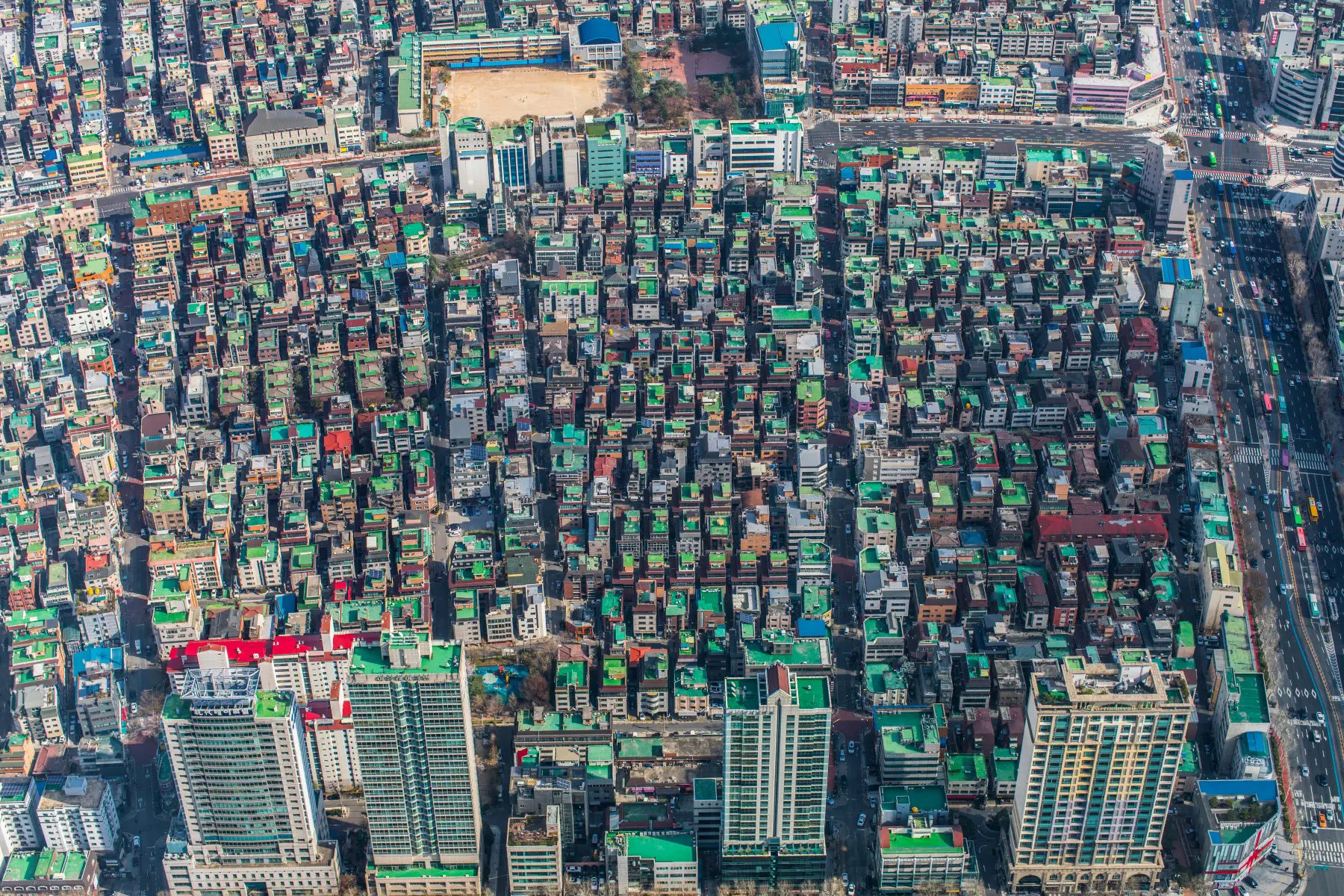

15 days, Seoul to Hiroshima
Your holiday at a glance
Fifteen days across South Korea and Japan. You sleep 3 nights in Seoul, 1 night in Jeonju, 2 nights in Busan, 2 nights in Tokyo and 5 more stops. The route also calls at Suwon, Damyang, Haeinsa, Mount Fuji and Iyashi No Sato Nenba and 6 more. 8 UNESCO listed sights sit on the itinerary, among them Atomic Bomb Dome and Changdeokgung Palace & Huwon.
Travel is by coach with an English speaking guide, and hotels and breakfast are included, along with your arrival transfer.
The experience
Pick a day. See where you go, what you do and where you stay.
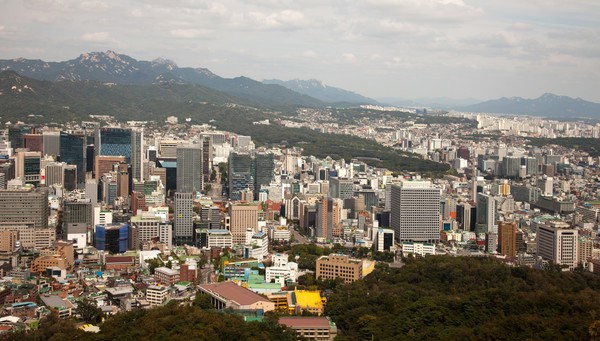
Welcome to Korea! You’ll be transferred to your hotel and have some free time. In the afternoon, you’ll receive information about the start of your tour.
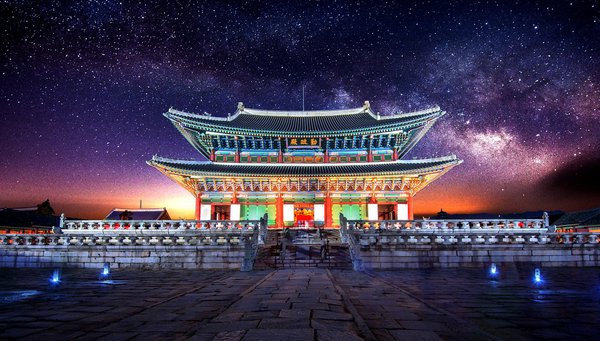
Seoul. Departure.
Aegibong Peace Ecological Park (Gimpo) Arrival at this symbolic space created to bring together peace, ecology, history, and culture, while promoting the values of Korean unification and collective memory.
Observatory visit: From this viewpoint, it is possible to see North Korean territory at a very short distance across the river. This is a truly unique experience.
Aegibong Peace Ecological Park (Gimpo). Departure.
Local restaurant. Arrival. Lunch included.
Local restaurant. Departure.
Paju Demilitarized Zone (DMZ Imjingang).
Arrival at the border area that divides South Korea and North Korea. We will visit the National Memorial and Mangbaedan Altar, the Imjingak Pavilion, a symbol of peace, and take a cable car ride (included) to observe from above the areas near the Military Demarcation Line. Finally, we will visit the Freedom Bridge, a former railway bridge over the Imjin River that, after the war, was used to return prisoners of war to South Korea. Today, it stands as a historic symbol of hope. This site allows us to understand Korean history from a human perspective: family separation, war, the hope for reunification, and the contrast between natural beauty and historical wounds.
Paju Demilitarized Zone (DMZ Imjingang).
Departure to Seoul Later, with our guide, we will visit the City Hall building, known for its wave-like (tsunami-shaped) design. Across from City Hall is Deoksugung Palace, where we can appreciate the coexistence of tradition and modernity in Korea. We will then walk to the Myeongdong district, the country’s largest commercial and entertainment area; its name means “bright tunnel.” Dinner included at a local restaurant. Return by Seoul’s modern subway system (ticket included).
Hotel. Arrival and overnight stay.
Please remember to bring your passport; it is mandatory. The DMZ is a military area and may be closed without prior notice. If this happens, an alternative tour will be provided.
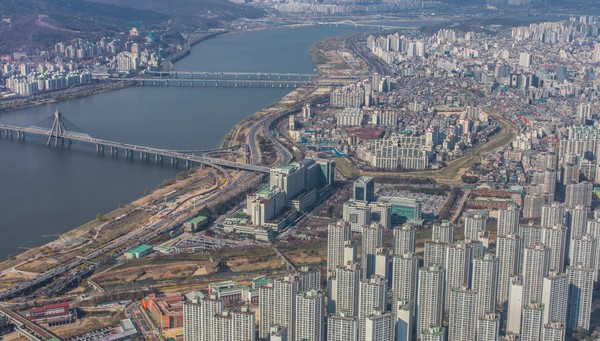
Today we include an extensive sightseeing tour of approximately five hours in Seoul.
We will visit Changdeokgung Palace (entrance included), a UNESCO World Heritage Site, a palace complex set within a large park. Afterwards, we will stroll through Bukchon Hanok Village, a traditional historic neighborhood of small, well-preserved houses. We will then visit the War Memorial of Korea (entrance included), an impressive museum that illustrates the conflicts experienced by Korea throughout its history, especially the Korean War, in which soldiers from many countries participated under the United Nations.
Lunch included at a local restaurant.
We continue to the Gangnam District, one of the busiest and most vibrant areas of the city, home to numerous shopping malls and entertainment venues.
To conclude the day, we stop at LOTTE WORLD TOWER, an impressive 550-meter-tall building, where you will have free time to go up to the tower (admission not included) or to stroll through its park or luxury shopping centers.
Return to the hotel and free time.
Important note regarding Bukchon Hanok Village: Due to regulations established to protect the residential environment, our vehicle may only park in designated areas, and we will complete an approximate 900-meter walk to reach this historic neighborhood. For operational reasons, this visit may be replaced by Namsangol Hanok Village, also featuring traditional Korean architecture, ensuring the cultural content of the itinerary is maintained.
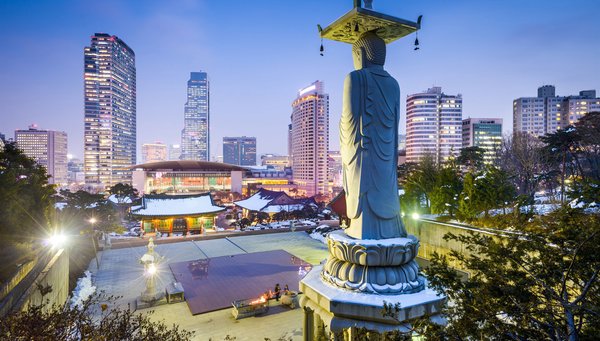
Hotel. Departure from the hotel.
Gyeongbokgung Palace (entrance included). Arrival at this impressive palace with over 600 years of history, where we will attend the Changing of the Guard ceremony, if it is taking place.
Gyeongbokgung Palace. Departure from Seoul heading south toward South Korea.
Suwon.
Arrival in the former capital of Korea, known for its impressive UNESCO World Heritage-listed fortress walls. We will visit the walls and their fortifications, as well as the Hwaseong Haenggung Summer Palace (entrance included), notable for its traditional architecture. Lunch included at a local restaurant.
Suwon. Departure.
Jeonju. Arrival. With our guide, we will explore its fascinating historic center (Hanok Village), with its traditional houses, local shops, and art galleries. After the walk, free time.
Pleasant landscapes, rolling hills, and extensive cultivated areas.
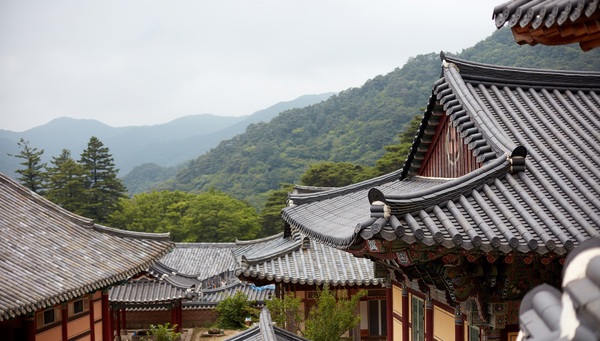
Jeonju. Departure.
Sunchang Gochujang Village.
Arrival. This traditional village is located at the foot of Amisan Mountain. With its hanok houses and courtyards filled with large earthenware jars known as hang-a-ri, it is home to expert gochujang (Korean chili paste) artisans who use traditional methods. We will enjoy a hands-on experience learning how this traditional sauce is prepared.
Sunchang Gochujang Village. Departure.
Damyang.
Arrival. Visit to the Juknokwon Bamboo Forest (entrance included), whose paths are considered among the most beautiful in the country—ideal for peaceful walks and enjoying the cool breeze. We will find all kinds of bamboo-crafted products, and visit places such as the Bamboo Museum (entrance included), where this plant is studied and revered. Lunch included, featuring the local specialty of rice cooked and served inside a bamboo stalk.
Damyang. Departure.
Haeinsa Temple (entrance included).
Amid impressive forest-covered mountain landscapes, we arrive at Haeinsa, one of the most important Buddhist temples in Korea and a UNESCO World Heritage Site. Built in 802, it houses the Tripitaka Koreana, the most complete collection of Buddhist texts, carved onto 80,000 wooden printing blocks.
Haeinsa. Departure.
Busan. Arrival in Korea’s second-largest city, known for its vibrant atmosphere. Overnight stay.
We travel through high mountains, enjoying especially beautiful landscapes in the Haeinsa area within the National Park.
We recommend wearing comfortable walking shoes for the walk to the entrance of Haeinsa Temple.
Departure from Busan.
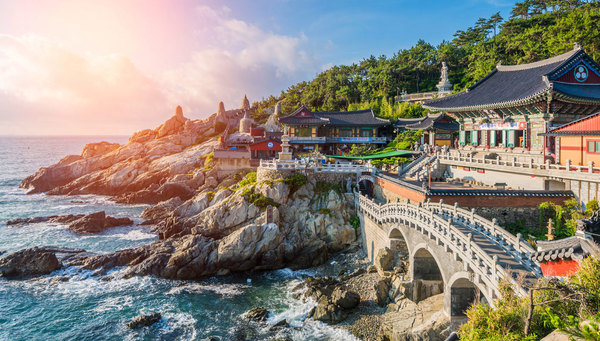
Arrival at Haedong Yonggungsa.
Visit of this 14th-century Buddhist temple located on the coastal cliffs of Busan. Along the main access path to the temple, there is a row of stone statues representing the twelve figures of the Chinese zodiac, which, according to Eastern philosophy, are considered guardian deities.
Departure from Haedong Yonggungsa.
Arrival in Busan, the second-largest city in South Korea, and city tour.
We will visit the United Nations Memorial Cemetery (entrance included), where people from many different countries are buried. We will then head to the largest fish market in the country, located next to Nampo Port. Lunch included at a local restaurant. Afterwards, we walk to Yongdusan Park, home to its impressive 120-meter pagoda.
Departure to Songdo Beach, which features the country’s first maritime cable car (included, subject to weather conditions), offering spectacular views of the bay.
We then continue to one of Busan’s most picturesque neighborhoods, Gamcheon Cultural Village, filled with brightly colored buildings, labyrinth-like alleyways, art galleries, pottery workshops, and charming cafés.
Departure from Gamcheon Cultural Village. Return to Busan.
Arrival at the hotel in Busan. Overnight stay.
We recommend wearing comfortable walking shoes for the walk to the entrance of Haedong Yonggungsa Temple and for strolling through Gamcheon Cultural Village.
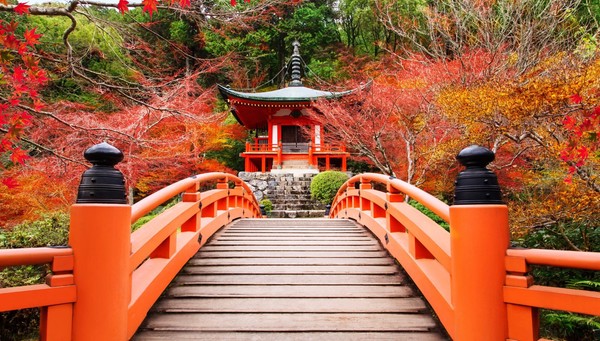
We’ll provide a transfer to the airport for the included flight to Tokyo.
Welcome to Japan! After completing border procedures, an assistant (usually Spanish-speaking, though sometimes English-speaking) will be waiting for you. After, you’ll take a shared shuttle bus to the hotel. Free time.
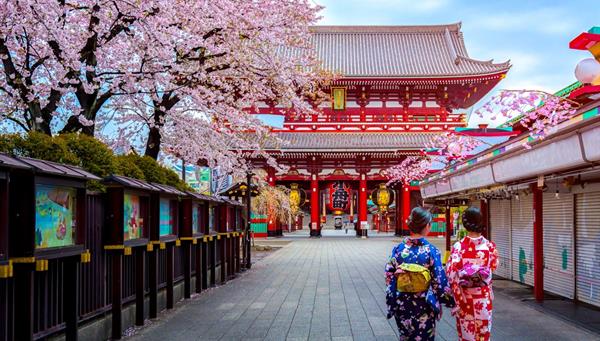
In the morning, we’ll take a long guided tour—about seven hours—through this simply stunning city!
Its vibrant energy and cutting-edge neighborhoods coexist with areas full of peace and tranquility. We’ll make a short stop at Zojoji Temple to capture the most beautiful view of the Tokyo Tower. You’ll notice hundreds upon hundreds of Jizo statues, stone-carved deities considered guardians of children, adorned with knitted hats, bibs, and pinwheels. Next, we’ll head to the famous Shibuya Crossing, that we will see from the bus. It is known as the busiest intersection in the world. Then we’ll visit Meiji Shrine, dedicated to the spirits of Emperor Meiji and his wife. Then we’ll head to Tokyo Skytree (admission included up to Tembo Deck at 350 meters high), Japan’s tallest structure, where we’ll enjoy an unmatched panoramic view of the city. We’ll end our visit in Asakusa, where we’ll explore Sensoji Temple and the famous Nakamise Street. Afterwards, we’ll return to the hotel passing by Akihabara district, the "Electric City", known as the center of Japanese manga and anime culture; and Ginza district.
We’ll meet our guide in the hotel lobby and take the subway (tickets included) to the Shinjuku area.
From there, we’ll enjoy a walk through this lively district before heading to a local restaurant for dinner (included). We’ll return to the hotel by subway, accompanied by our guide.
The order of the visits may vary depending on the admission time for Tokyo Skytree. In case of bad weather or other exceptional circumstances, access to Tokyo Skytree may be limited. In that case, an alternative visit to another iconic city viewpoint will be offered.
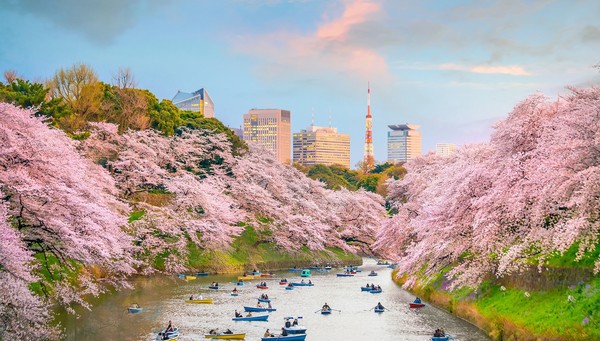
Departure. We travel toward the beautiful Mount Fuji area, enjoying the scenic landscapes along our route.
Kawaguchiko – Arrival.
We arrive in this idyllic town of charming houses, flowers, and mountains beside a stunning lake. Upon arrival, we’ll visit Arakurayama Sengen Park, famous for its beautiful pagodas and for offering some of the most iconic and breathtaking views of Mount Fuji. Afterwards, we’ll visit the Fuji Sengen Shrine, a magical place surrounded by tall trees — traditionally the starting point of the pilgrimage up Mount Fuji. We’ll take a moment to give thanks at the shrine for the opportunity to visit such a spiritually rich and enchanting site. Around 12:30 p.m. – We’ll enjoy a pleasant 30-minute boat ride on Lake Kawaguchiko.
After lunch, we’ll begin our ascent toward Mount Fuji via the road that leads to the “Fifth Station.” Driving through spectacular forests and enjoying panoramic views, we’ll reach an altitude of 2,305 meters (7,562 feet).
You’ll have time to explore the area, popular among tourists and mountain climbers, stroll around, and visit the small shrine located there.
Mount Fuji – Departure.
Kawaguchiko – Arrival. We’ll stay overnight at a Ryokan (traditional Japanese inn), where we recommend enjoying the Onsen (public hot spring bath). The experience in this typical Japanese bath will be unforgettable. Dinner included.
Beautiful mountain landscapes, with stunning views on the ascent to Mount Fuji.
Bring warm clothing, as it can be cold on Mount Fuji. In winter, the route to the mountain is often closed due to snow or weather conditions; during those times, we’ll go as far as we’re permitted.
In winter, the route to the Fifth Station is often closed due to snow or weather conditions; during those times, we’ll go as far as we’re permitted.
In the planned Ryokan, some rooms are Japanese-style with tatami mats, while others are Western-style. Occasionally, accommodation may be provided in a Western-style hotel instead.
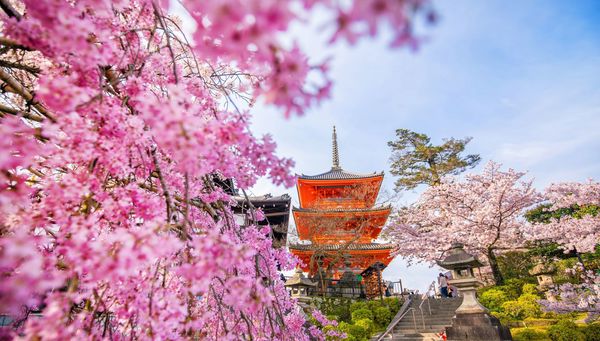
Departure from Kawaguchiko. We’ll travel along a scenic road bordered by the picturesque Kawaguchi and Saiko Lakes.
Iyashi no Sato Nenba.
This charming mountain village, once destroyed by a typhoon in 1966, has been beautifully restored as a traditional open-air museum. Its historic houses now serve as arts and crafts shops, restaurants, and cultural museums, offering a glimpse into Japan’s rural heritage.
Departure from Iyashi no Sato Nenba.
Arrival at Shiraito Falls. We’ll admire these breathtaking waterfalls, considered one of the most beautiful in Japan, with cascades that reach a height of 20 meters.
Departure from Shiraito Falls. Free time at a service for lunch.
Admission included to the Toyota Museum, a must-visit destination for car enthusiasts.
Departure from the Toyota Museum.
Kyoto. Accommodation and free time.
Wear comfortable walking shoes for our visit to Shiraito Falls.
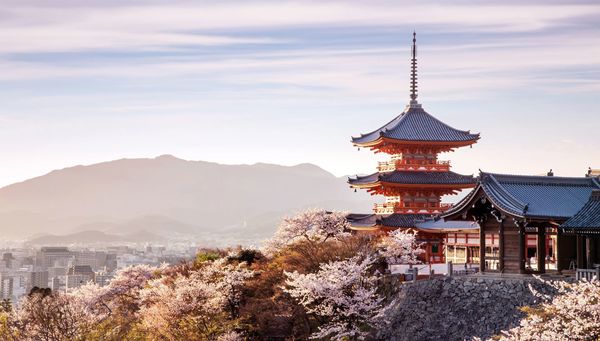
We’ll spend the entire day exploring Kyoto , Japan’s capital from 794 to 1868 and home to the Imperial Court.
Remarkably, Kyoto was the only major Japanese city spared from bombing during World War II, allowing it to retain its rich artistic heritage. Notably, the Kyoto Protocol, aimed at limiting greenhouse gas emissions, was signed here in 1997. We’ll include a visit to Kyoto’s most iconic landmarks. Our tour will begin in Arashiyama , where we’ll admire the Togetsukyo Bridge, or “Bridge over the Moon.” This spot offers a breathtaking panorama of the surrounding landscape. We’ll then visit the Tenryuji Temple , one of Kyoto’s “five great Zen temples” and a UNESCO World Heritage Site, followed by a serene walk through its mystical bamboo forest . Next, we’ll explore the magnificent Fushimi Inari Shrine ; the Imperial Palace ; and the Kinkakuji Temple , also known as the “Golden Pavilion,” surrounded by its spectacular gardens. (The order of the visits may vary.) After the tour, you can enjoy some time to stroll through Gion , Kyoto’s vibrant traditional district, known for its lively atmosphere and geishas.
Afterward, we’ll provide a transfer to Gion, Kyoto’s traditional and lively district, famous for its Geishas.
You’ll have time to stroll and soak in the vibrant atmosphere of this historic neighborhood. The return to the hotel will be on your own. We recommend taking a taxi, and your guide will explain how to do so.
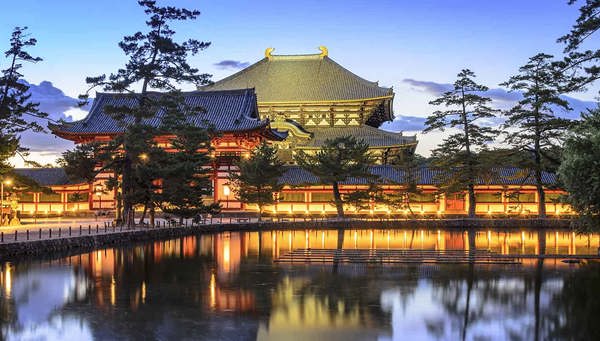
Departure from Kyoto.
Nara.
Our visit will take us to Todaiji Temple, a spectacular Buddhist site built in 752. The temple houses a giant Buddha statue and is surrounded by a serene park where you can interact with the friendly deer that roam freely. This will be your chance to take photos and enjoy the unique atmosphere of this historic area.
Departure from Todaiji Temple.
Horyuji Buddhist Temple.
This UNESCO World Heritage Site offers a glimpse into Japan’s ancient spiritual heritage. Here, you can explore its seminary, monasteries, and temples, including the iconic main pagoda, one of the world’s oldest wooden buildings and the oldest Buddhist temple in Japan. Horyuji remains an important place of worship and historical significance.
Departure from Horyuji. Lunch will be included at a local restaurant before we continue to Osaka.
Osaka.
Arrival in Japan’s second-largest city, known for its modern skyline and vibrant culture. After check-in, you’ll have free time to explore. In the evening, we’ll visit Dotonbori, a bustling and colorful district famous for its lively nightlife, neon signs, and excellent dining options. Enjoy the evening at your leisure.
Departure from Osaka. We’ll head towards Osaka Bay.
Himeji. Admission to the stunning Himeji Castle is included, a masterpiece of traditional Japanese castle architecture. After exploring the castle, we’ll enjoy lunch at a local restaurant.
Departure from Himeji.
Okayama.
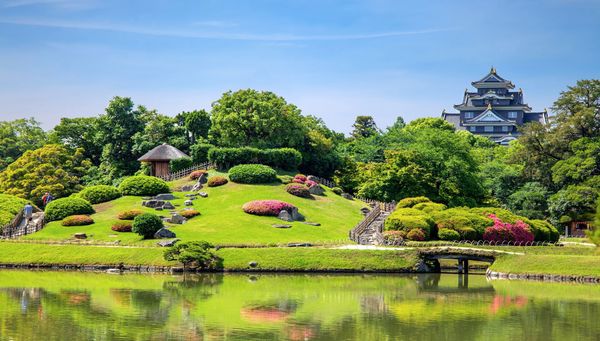
We’ll visit Korakuen Garden, renowned as one of Japan’s most beautiful gardens, featuring lakes, waterfalls, and traditional teahouses. By crossing a pedestrian bridge over the river, you’ll have the opportunity to visit Okayama Castle, a sixteenth-century Japanese fortification rebuilt in 1966 after being destroyed in a World War II bombing (visit inside the castle not included). Afterward, you’ll have free time to explore the city, an active provincial capital with just over 700,000 inhabitants.
Arrival at the hotel for accommodation.
Densely populated areas, major highways, with occasional sea views.
If there are long queues at the castle, we recommend enjoying the beautiful surrounding gardens instead.
On some dates, we may stay in Fukuyama or Kurashiki. The visit to Kurashiki may take place on the same day in the afternoon.
Departure from Okayama.
Kurashiki. This charming city boasts a beautifully preserved historic center, where you’ll have time to stroll through its picturesque streets and soak in its old-world atmosphere.
Departure from Kurashiki.
Hiroshima.
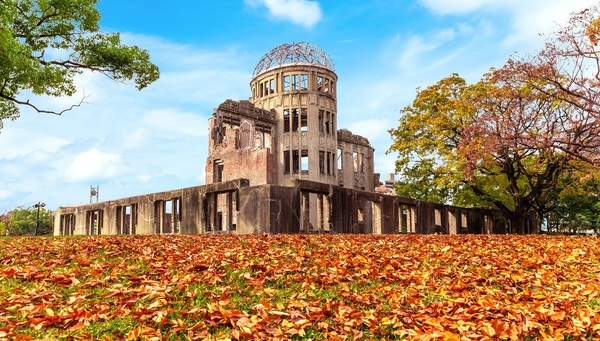
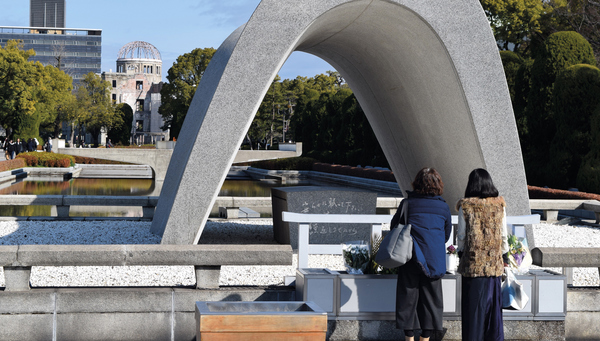
Arrival in this city, known worldwide for its tragic history as the site of the atomic bombing in 1945. We’ll visit the Peace Memorial, the Atomic Bomb Dome, and the poignant Peace Memorial Museum. After the visits, you’ll have time for lunch. In the afternoon, we’ll head to the outskirts of Hiroshima to board a small ferry for a 15-minute ride to Miyajima, an island renowned for its spiritual significance as a place where "man lives alongside the Gods." Here, we’ll visit the iconic Itsukushima Shrine, dedicated to the guardian of the seas and famous for its torii gate that appears to float on the water. You’ll have time to explore the shrine and wander through the charming center of the island.
Departure from Miyajima. We’ll take the ferry back and continue to Hiroshima, where dinner will be included.
Pleasant views and a serene boat trip to Miyajima.
The order of visits in Hiroshima may vary, with the possibility of visiting Miyajima first and Hiroshima afterward.
After breakfast, our journey will come to an end, leaving you with wonderful lasting memories.
Timings are from the operator's itinerary and may change on the day.
Know your package
A clear view of what your tour covers and what to budget for separately.
More choice, less planning
Ways to personalise a Europamundo tour. Ask us what is available for your route and dates before booking.
Short on time? Ask to join only the days and stops you want.
Request extra hotel nights before or after the tour. These cost extra.
On eligible routes, stay longer in a city and join a later group. Extra charges apply.
Some circular routes let you join at a different stop, subject to the tour schedule.
Fly from your preferred Indian city. International flights are separate from the tour price.
These are requests for an expert to arrange, not instant changes to this tour. We will confirm availability and the revised quote.
A little more discovery
Inspiration for your free time. Only visits listed in the day-by-day plan are included in the tour.
A haunting and powerful UNESCO World Heritage site, a direct remnant of the atomic blast.
Free entry listed · check before visitingA UNESCO World Heritage site, this palace is renowned for its harmonious integration with the natural landscape, especially its stunning 'Secret Garden' (Huwon).
A magnificent Buddhist temple known for its wooden stage jutting out from the main hall, offering breathtaking views of the city. A UNESCO World Heritage site.
A spectacular Zen Buddhist temple whose top two floors are completely covered in gold leaf. It perfectly reflects in the surrounding pond, creating an unforgettable sight.
A charming, revitalized hanok village with narrow alleys, hidden cafes, unique boutiques, and traditional restaurants, offering a more intimate experience than Bukchon.
Afternoon to evening
Get lost in the alleys and discover a hidden cafe or craft shop.
One of Seoul's oldest neighborhoods, known for its traditional houses, art galleries, and quaint shops, offering a more bohemian and local feel than other hanok villages.
Morning or early afternoon
Visit the Daerim Museum and explore the small side streets for unique finds.
A bustling alley famous for its dried pollack (nogari) and cheap beer, where locals gather on plastic stools for a lively evening. It's an authentic Korean pub experience.
Evening
Order a few plates of nogari and immerse yourself in the boisterous atmosphere.
A quiet village where artists have converted traditional hanok houses into studios, galleries, and cafes, offering a more contemporary take on hanok living.
Afternoon
Look for small, independent galleries and enjoy a coffee in a unique artistic setting.
The route
Numbered pins are where you sleep and match the stops above. Small dots are places the coach passes through. Lines join the stops point to point, not along the road.
Before you book
Prices, paperwork and practical questions. Find what matters to you.
The operator's hotel options. Your exact hotel is confirmed closer to departure.
Yanghwa-ro, 144 Mapo-gu, Seoul, Corea del Sur, 144 Mapo-gu SEOUL
253, Gangnam-daero, Seocho-gu, 06735
431 samseong – ro, Gangnam – gu, seoul, 06195, Korea
41, Hyeonmu 1-gil, Wansan-gu Jeonju-Si,, 00 JEONJU
From ₹5,24,553 per person for the tour itself (per person on triple, land only, excludes flights), and from ₹6,21,681 per person with flight from bengaluru, the airport transfer and travel insurance. An NxVoy consultant confirms the exact figure for your dates and rooms and sends you a quote reference.
15 days and 14 nights across South Korea, Japan, seoul to Hiroshima.
18 departure dates are published, 15 with seats open; the next is 18 October 2026. Seats must be confirmed before you book flights. Published availability is not a seat hold.
Your written quote will state the deposit, balance due date, payment currency, taxes and any agency charges. Review these before paying. Wait for confirmed tour seats before buying separate flights.
This tour runs in January, February, March, September, October, November, December. Its peak season is September, October.
Indicative amounts in US dollars from NxVoy destination research.
General services: Travel by bus with English speaking guide, basic travel insurance, hotel and breakfast buffet. Includes arrival transfer City tour in: Seoul, Busan, Tokyo, Kyoto Flights from India, visa assistance, airport transfers and separate travel insurance can be requested in your NxVoy quote. They are additional unless expressly included in the confirmed price.
Hotel check-in is usually from 2pm. An early arrival does not guarantee access to your room. Ask your consultant about an extra night and confirm where to meet the group before you travel.
Excursions marked optional are paid for separately. Ask your NxVoy consultant which ones can be arranged in advance and which are booked with your guide.
Yes. Ask NxVoy about visa assistance, fees and application timelines for your passport. Visa approval is decided by the relevant authorities and is not guaranteed.
Confirm the current requirements for your passport before booking. Visa fees and assistance are quoted separately unless explicitly included.
Cancellation charges depend on the policy assigned to your tour and when you cancel. Non-refundable services can add costs. Ask NxVoy for the policy number, deadlines and all charges in writing before paying. A cancellation request needs operator confirmation; sending a message alone does not complete it.
Talk it through with a travel expert.
Payment & cancellation
Know the total, payment dates and cancellation charges for your exact trip. Keep your written quote and booking confirmation together.
Your written quote will state the deposit, balance due date, payment currency, taxes and any agency charges. Review these before paying. Wait for confirmed tour seats before buying separate flights.
Cancellation charges depend on the policy assigned to your tour and when you cancel. Non-refundable services can add costs. Ask NxVoy for the policy number, deadlines and all charges in writing before paying. A cancellation request needs operator confirmation; sending a message alone does not complete it.
Only listed services are included. International flights, visas and optional outings usually cost extra. Check your quote for transfers and other additions.
Basic assistance cover applies during the tour. Check its limits and arrange any additional cover you need. You remain responsible for passport and entry documents.
Unused services may qualify for a future-trip credit, subject to conditions and deductions. A cash refund is not automatic.
Ask for an itemised total covering your chosen tour, room type, flights and extras, including any applicable Indian taxes, agency charges and currency-conversion terms. Confirm the exact payment dates and cancellation policy before you commit.
Your quote should distinguish Europamundo's tour conditions from any additional agency terms. If two documents differ, ask us to resolve the difference in writing before paying.
A short guide to the operator's 2026–27 conditions, checked 1 October 2026. Ask NxVoy for the full conditions with your written quote before booking.
From your door, and back again
Need flights, visa assistance or airport transfers? Tell us where you are starting. We will bring the pieces together in one personalised quote.
Tour reference 7539 · Prices are per person in the currency shown. Tour-only prices exclude flights.