Old methods are costing you time and money. Discover how modern travelers are using AI to build superior journeys.
Manual spreadsheets, fragmented emails, and outdated paper maps. Requires dozens of hours of research and offers zero flexibility during the trip.
AI-driven platforms that integrate bookings, calculate real-time transit, and provide instant itinerary updates. Built for the efficiency-seeking traveler.
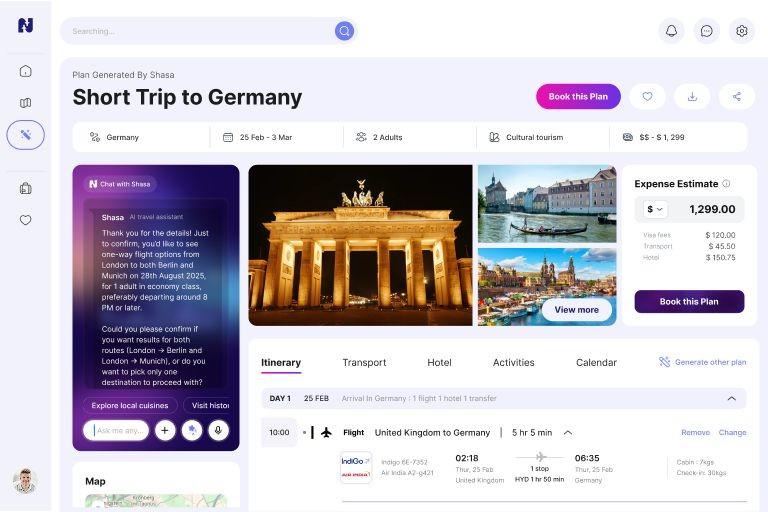
Forget the bloat. Focus on these three pillars of organization.
One place for flights, hotels, and activities. If it's not in the dashboard, it's not on the trip.
Instead of reading 50 blogs, use a specialized ai travel planner to distill the best advice instantly.
A mobile app that lives in your pocket, providing offline access and real-time alerts while you explore.
Changed a flight? The app updates your whole schedule. A spreadsheet stays the same and becomes useless.
Apps do the thinking. They tell you "Your train leaves in 30 minutes, go now." Spreadsheets force you to manage time manually.
Apps know where you are. They suggest lunch based on your current location, not just a random list.
Lose signal in a new city? The app still has your full plan and maps cached for safety.
We've built the ultimate "middle ground" between a cold automation and a premium travel agent.
"FLAWLESS"
The best way is now the 'Hybrid AI' approach: use Artificial Intelligence to build the data-heavy foundation and logistics, then apply your human intuition for specific dining and personal interests.
Spreadsheets are static. They don't update when a flight is delayed, they don't know the walking distance between two points, and they can't suggest activities based on your location. Apps are dynamic and real-time.
The best way is to use a collaborative travel planner app. This ensures everyone has the latest version of the itinerary, avoids duplicate bookings, and keeps group communication in one place.
Prioritize 'spatial efficiency'—ensuring your activities are geographically clustered. This single change saves the average traveler 2-3 hours of transit time per day.
Use the best way to plan a trip and see the difference on your next vacation.
.png&w=64&q=75)