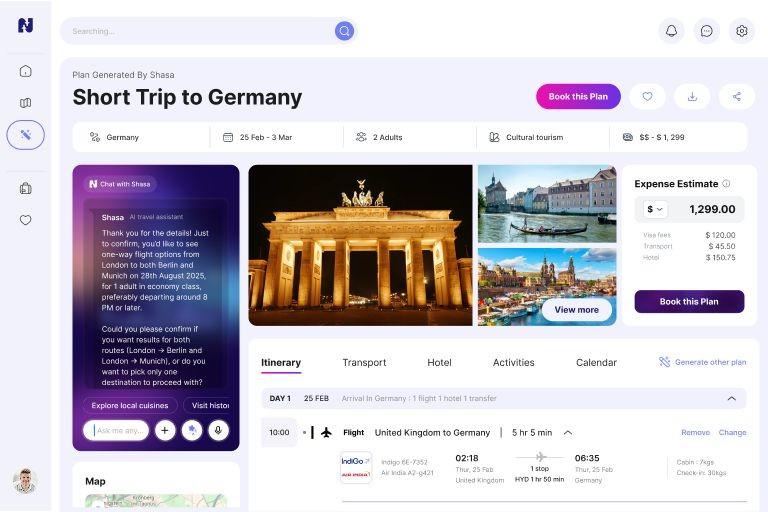
Planning your first trip shouldn't be complicated. Just tell me where you want to go, and I'll handle everything—from beginner-friendly destinations to complete itineraries. As the best AI travel planner, I make first-time travel planning effortless.

Planning your first trip can feel overwhelming, but it's easier than you think! This comprehensive guide breaks down everything into simple, manageable steps. From choosing the perfect destination to packing your bags, we'll help you plan a memorable first adventure without the stress.
Our AI trip planner creates personalized first-time traveler itineraries, handles all the logistics, and ensures you don't miss any important steps. It's like having a travel expert in your pocket!
Follow these steps for a stress-free first travel experience
Select a beginner-friendly destination that matches your interests and budget
Create a realistic budget covering all travel expenses
Reserve flights, trains, or other transportation methods
Book hotels, hostels, or vacation rentals
Research and book key activities and create a rough schedule
Get necessary documents and health preparations
Pack efficiently with everything you need
Handpicked locations that are beginner-friendly and unforgettable
Great public transport, lots to see, English speaking
Walkable strip, lots of entertainment, all-in-one destination
Theme parks, family-friendly, well-developed tourism
Beautiful weather, relaxed atmosphere, walkable areas
English speaking, excellent transport, tourist-friendly
Close to US, English speaking, safe and clean
Tourist-focused, adventure activities, US dollar accepted
English speaking, friendly locals, beautiful scenery
Excellent tourism infrastructure, iconic attractions
Extremely safe, efficient transport, English signs
Walkable city, beach access, vibrant culture
English widely spoken, bike-friendly, compact city
Don't leave home without these critical documents
Valid 6+ months beyond travel dates
If required for your destination
For car rentals and ID
Notify bank of travel plans
Medical and trip coverage
Printed and digital copies
Confirmation numbers and addresses
Embassy, family, hotel information
If required for destination
Extra for visas or permits
Where your money goes and how to plan financially
Essential items organized by category for stress-free packing
Avoid these pitfalls for a smooth first travel experience
Pack light with versatile items. You'll buy souvenirs and can do laundry if needed.
Leave free time for spontaneous discoveries and rest. Jet lag and fatigue are real.
Add 20% buffer to your budget for unexpected expenses and opportunities.
Research visa requirements 3+ months in advance. Some take weeks to process.
Medical emergencies abroad can cost thousands. Insurance is essential.
Tell your bank and credit card companies about travel dates to avoid blocked cards.
Learn basic etiquette, dress codes, and cultural norms to respect local culture.
Book flights and accommodations 2-3 months ahead for better prices and availability.
Download these apps before you travel for a smoother experience
Offline maps, public transit directions
Real-time translation, offline phrases
Exchange rates, offline calculator
Organizes bookings, creates itineraries
Free international messaging and calls
Alternative to hotels, local experiences
Complete your travel education with these guides
Everything first-time travelers need to know
First-time travelers should start planning 3-4 months in advance. This gives time to research destinations, save money, book flights and accommodations, handle visa requirements, and prepare documents without stress.
Great first-time destinations include: Domestic - New York City, Las Vegas, San Diego. International Easy - London, Toronto, Costa Rica. These places have good tourism infrastructure, English widely spoken, and are generally safe and welcoming to tourists.
First-time trip budgets vary: Domestic trips $400-800 per person, nearby international $800-1200, and longer international $1200-2000+. Always include a 15-20% buffer for unexpected expenses and opportunities.
Essential documents include: Passport (valid 6+ months), visa (if required), driver's license, credit cards, travel insurance, flight tickets, hotel reservations, and emergency contacts. Keep both physical and digital copies.
.png&w=64&q=75)