Explore itineraries modeled by 1,000,000+ travelers
Four simple steps to your dream vacation with NxVoy.
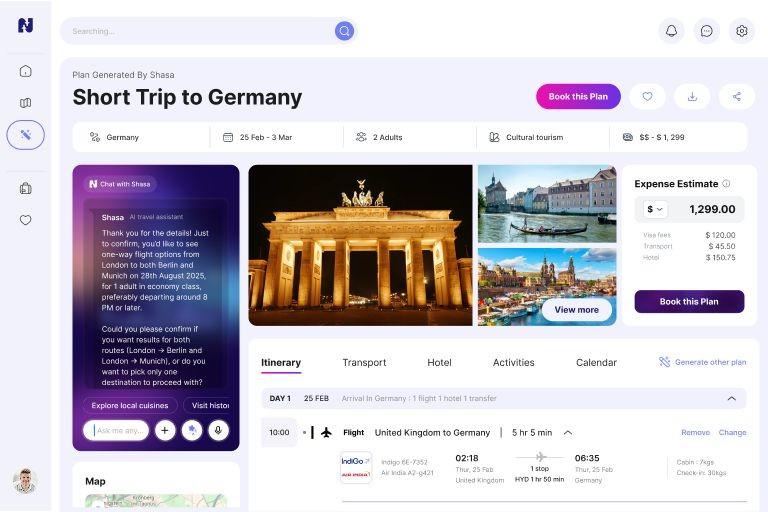
Tell us where you want to go and for how long. Shasa handles the rest.
Select your travel pace, budget, and interests (History, Food, Adventure).
Get a structured, optimized daily itinerary in under 60 seconds.
Edit stops, reorder days, or ask Shasa to regenerate specific parts.
Requires 10-20 hours of research across 20+ tabs.
Inefficient routes leading to backtracking and wasted time.
Missing timing for local events or peak crowd periods.
Instant itinerary generation in under 60 seconds.
Smart route optimization saves 3+ hours of transit daily.
Real-time data for opening hours and busy periods.
NxVoy is the only AI trip planner built for groups. Invite your travel buddies, vote on activities, and chat in real-time right inside your itinerary.
Reach a consensus instantly with built-in poll features.
Updates sync instantly across all devices.
Active Room: Paris Trip
From understanding IRCTC logistics to comparing flights on IndiGo and Air India, our AI vacation planner is fine-tuned for the Indian traveler.
Don't overspend. Set your total budget and let Shasa allocate it perfectly between hostels, fine dining, and hidden gems.
Automatic Allocation
Smart Spending across €200/day
Choose the feeling, and we'll craft the perfect journey
Adrenaline, altitude & moments you'll never forget
View all Feel Alive packages →No packages curated for this feeling yet - coming soon.
The one experience each city is world-famous for
Real results for real travelers. No generic advice—just logically clustered routes.

The world's most scenic drives - tours & experiences along the way
Explore how our AI specializes its logic for your specific travel style.
Designed for independent spirits who value safety and community connections.
Example Itinerary
Budget: ₹25,000
Fort Kochi
Female-dorm boutique hostels
Munnar
AI-optimized shared taxis
Alleppey
Shared houseboat experience (₹1,500/pp)
Kid-friendly routes with necessary rest breaks and interactive stops.
Example Itinerary
Family of 4: ₹80,000
Delhi
Zoo & Interactive Museums
Agra
Sunset views & Light shows
Jaipur
Rickshaw rides & Cultural villages
Curated scenes for private dining, scenic views, and boutique villas.
Example Itinerary
Couple: ₹60,000
Day 2
Private sunset boat ride
Day 4
Michelin-style rooftop dining
Day 5
Hot air balloon over Jaipur
Optimized for high-speed WiFi, coworking hubs, and community meetups.
Example Itinerary
Total: ₹75,000
Housing
Villas with dedicated workspaces
Community
Coworking meetups & Networking
Weekends
Uluwatu surf & Ubud exploration
Join 1M+ travelers using the smartest AI trip planner on the market.
.png&w=64&q=75)