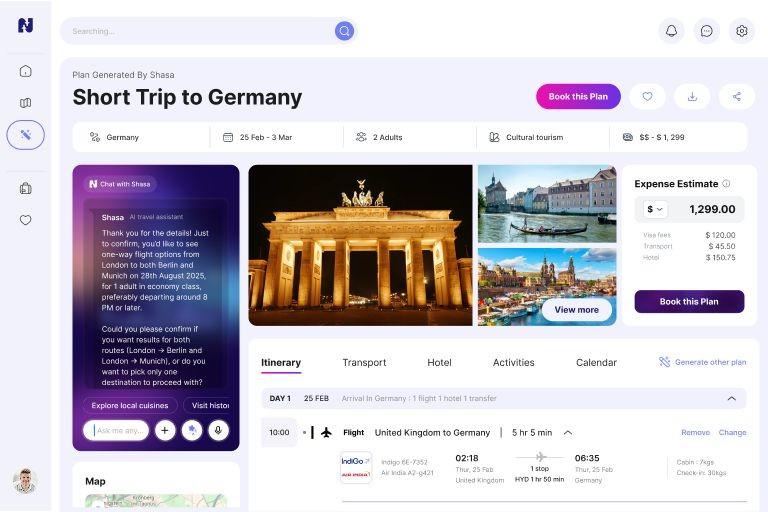
New to travel planning? Just tell Shasa "I want to plan my first trip to Paris" and I'll guide you step-by-step, suggest beginner-friendly activities, and create your complete travel plan with budget breakdown.

From Zero to Confident Traveler with Shasa AI
Travel planning can feel overwhelming at first, but it's a skill that anyone can learn. This comprehensive guide breaks down travel planning into simple, manageable steps that will transform you from a nervous beginner into a confident traveler. We'll cover everything from the fundamental mindset to practical skills and common pitfalls to avoid.
Our AI trip planner is designed specifically for beginners. It handles the complex logistics while you learn the fundamentals, providing step-by-step guidance and ensuring nothing important is missed.
Master these basics before planning your first trip
Understand your travel motivation to choose the right destination
Be honest about what you can afford to avoid financial stress
Balance vacation days with travel time and jet lag
Thoroughly investigate potential destinations
Follow this timeline for stress-free planning
Initial research and inspiration gathering
Making concrete decisions and bookings
Detailed planning and preparation
Final preparations and packing
These skills will make your travels smoother and more enjoyable
Learn to read maps and ask for directions
Essential phrases for communication
Monitor expenses during travel
Capture memories without missing experiences
Pack light but comprehensively
Respect local customs and traditions
Learn from others' mistakes to travel smarter
Overscheduling leads to burnout and missed experiences
Plan 2-3 main activities per day maximum. Leave time for spontaneous discoveries and rest.
Underestimating how time zone changes affect energy
Arrive a day early if possible, stay hydrated, avoid caffeine, and adapt to local time immediately.
Bringing too much stuff creates logistical problems
Pack for 3-4 days maximum, even for longer trips. You can buy items or do laundry if needed.
Assuming everything will go according to plan
Have alternative activities for bad weather, backup transportation options, and extra cash for emergencies.
Trying to save money by skipping essential coverage
Medical emergencies abroad can cost thousands. Insurance is non-negotiable for international travel.
Having cards blocked for suspicious activity
Call your bank and credit card companies 1-2 weeks before travel to provide dates and destinations.
Understand where your money goes and how to plan financially
Book flights early, consider budget airlines, use public transport
Stay slightly outside city centers, read recent reviews, check cancellation policies
Mix dining experiences, eat where locals eat, pack some snacks
Look for city passes, book popular attractions online, check for free days
Set shopping limits, carry cash for tips, keep emergency fund separate
Apps and resources that make travel planning easier
Organize bookings and create itineraries
Track expenses and manage money
Offline maps and directions
Language barriers and communication
Find and book places to stay
Find and compare flights
More resources to build your travel confidence
Common questions from beginner travelers
Essential trip planning includes: understanding your travel motivation, setting a realistic budget, choosing beginner-friendly destinations, booking transportation and accommodation, preparing necessary documents, and creating a flexible itinerary. Start with domestic or nearby international destinations.
Beginners should start planning 3-6 months in advance for international trips and 1-2 months for domestic trips. This allows time for research, saving money, booking deals, handling visa requirements, and preparing without stress.
Beginner trip budgets vary: Domestic weekend trips $300-600, domestic week-long trips $800-1500, nearby international trips $1200-2000, and longer international trips $2000-4000+. Always include 15-20% extra for unexpected expenses.
Common mistakes include: overscheduling activities, ignoring jet lag, overpacking, not having backup plans, skipping travel insurance, and not informing banks about travel plans. The key is to stay flexible and prepared for unexpected situations.
.png&w=64&q=75)